

The Travelpro Crew Classic Compact Carry-On Spinner is the best carry-on luggage for Alaska Airlines for most travelers. Its published overall dimensions are exactly 22 × 14 × 9 inches, including wheels and handles, and its 38-liter interior, self-aligning spinner wheels, and useful organization make it a practical frequent-travel choice. Keep its expansion zipper closed for flight. Alaska confirms the wheel-and-handle-inclusive limit on its official carry-on luggage page.
Quick answer: Alaska Airlines permits one carry-on up to 22 × 14 × 9 inches, including wheels and handles, plus one smaller personal item. The Travelpro Crew Classic Compact is our best overall pick because its unexpanded exterior matches that limit and balances 38 liters of capacity with strong organization and a 6.8-pound empty weight.
We evaluated published overall dimensions, empty weight, capacity, construction, wheels, handle design, organization, warranty, and value. No first-hand product testing was supplied for this guide.
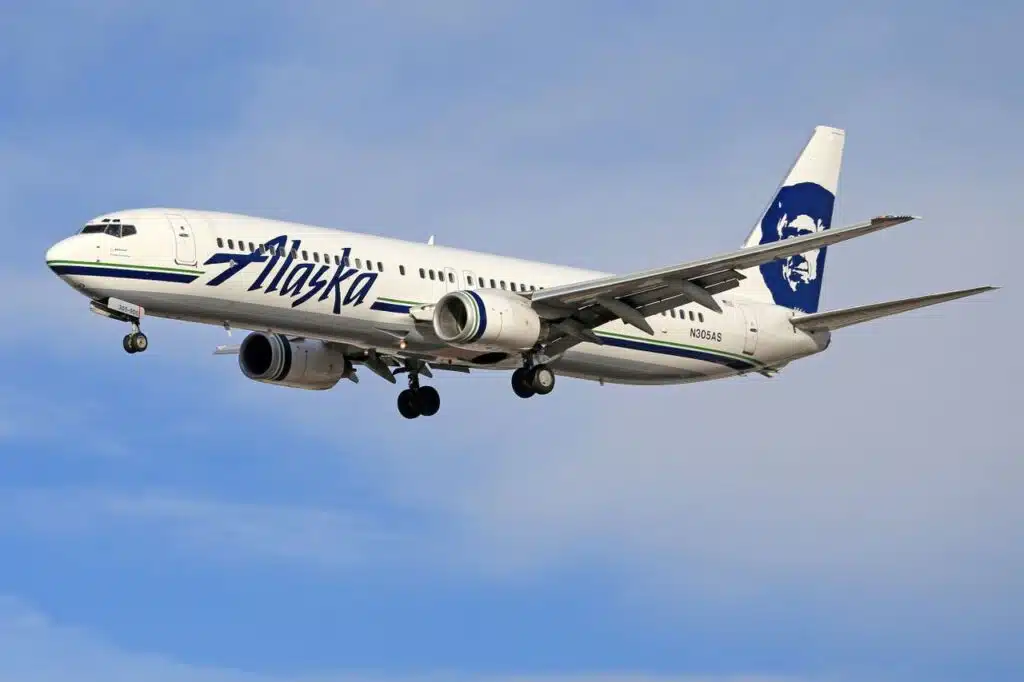
How we selected the best carry-on luggage for Alaska Airlines
Size compliance was the first filter. We compared wheel-and-handle-inclusive exterior dimensions against Alaska’s current 22 × 14 × 9-inch rule. We excluded popular models that exceed any dimension and treated expanded depth separately.
We then considered:
- Empty weight: A lighter case leaves more of the lifting burden for belongings, even though Alaska does not publish a general carry-on weight maximum.
- Capacity-to-weight ratio: Published volume was useful only when the manufacturer stated it consistently. We did not estimate missing capacities.
- Wheels and handle: Stable wheels and a low-wobble handle matter during long connections and crowded boarding lines.
- Material and durability: Softside fabric offers exterior access and some flexibility; hardshell material offers a rigid barrier and divided packing.
- Organization: Compression panels, garment storage, pockets, and restraint straps can improve usable space but also add weight.
- Warranty: We compared the published coverage, not just the headline duration.
- Value and traveler fit: Each recommendation solves a distinct problem rather than filling an arbitrary ranking.
This is a research-based evaluation of published specifications.
1. Travelpro Crew Classic Compact Carry-On Spinner — Best overall

Best for: Frequent leisure or business travelers who want exact unexpanded sizing, excellent organization, and refined spinner handling.
Key specifications: 22 × 14 × 9 inches overall; 6.8 pounds; 38 liters; high-density coated fabric; eight-wheel MagnaTrac spinner system; Built for a Lifetime limited warranty with a three-year carrier-damage benefit after timely registration.
The Crew Classic Compact earns first place because it has no obvious weak link for mainstream Alaska travel. Travelpro publishes both its case and overall dimensions, eliminating a common sizing ambiguity. Its removable compression organizer, water-resistant storage, accessory pockets, YKK zippers, and self-aligning wheels are meaningful for travelers who live out of a small suitcase.
Who should buy it: Regular flyers, organized packers, and travelers who push a spinner through large airports.
Who should avoid it: Occasional travelers who do not need the added organization, or buyers who prefer a split clamshell hardside.
Advantages
- Exact 22 × 14 × 9-inch published overall dimensions
- 38-liter volume at a reasonable 6.8-pound empty weight
- Self-aligning, eight-wheel spinner design
- Removable compression organizer and multiple pockets
- Strong limited warranty plus registered carrier-damage coverage
Drawbacks
- Heavier and more expensive than the Maxlite 5 Compact
- Two-inch expansion can make it too deep for Alaska’s limit
- Soft sides do not provide the rigid barrier some travelers prefer
Most important buying consideration: Select the Compact Carry-On, not Travelpro’s regular Carry-On; the latter is larger. Keep the expansion closed before boarding.
2. Kenneth Cole Reaction Renegade 20-Inch — Best value

Best for: Budget-conscious travelers who want a hardshell spinner that fits Alaska’s dimensions while unexpanded.
Key specifications: 22 × 14 × 9 inches unexpanded; 7.35 pounds; ABS shell; eight-wheel spinner system; 10-year limited warranty; two-inch expansion.
The Renegade earns the value position because it combines a rigid ABS exterior, molded corner guards, divided packing, and eight spinner wheels without requiring a premium budget. Its published unexpanded exterior reaches—but does not exceed—each Alaska dimension.
Who should buy it: Vacationers and occasional flyers who prioritize features per dollar over minimum weight or premium materials.
Who should avoid it: Frequent travelers who want lighter polypropylene or polycarbonate, or anyone likely to use expansion on the outbound flight.
Advantages
- Exact unexpanded 22 × 14 × 9-inch exterior
- Eight-wheel spinner system for multidirectional movement
- Molded corner guards and side feet
- Divided interior with restraint and accessory storage
- Longer limited warranty than many budget cases
Drawbacks
- ABS is a value-oriented material and is not as light as the Maxlite softside
- Expansion increases depth to 11 inches
- No consistently verified liter capacity
Most important buying consideration: Amazon listings may group several sizes and colors. Confirm that the selected option is the 20-inch carry-on with 22 × 14 × 9-inch unexpanded overall dimensions.
3. Travelpro Maxlite 5 Compact Carry-On Spinner — Best lightweight

Best for: Travelers who want to reduce lifting effort without dropping to an underseat-sized bag.
Key specifications: 22 × 14 × 9 inches overall; 5.1 pounds; 38 liters; polyester with water- and stain-resistant coating; four spinner wheels; Built for a Lifetime limited warranty and a one-year registered carrier-damage benefit.
At 5.1 pounds, the Maxlite 5 Compact is 1.7 pounds lighter than the Crew Classic Compact while matching its published 38-liter volume. That difference matters when lifting a packed case overhead or carrying it up stairs. Its tapered expansion, adjustable handle, front pocket, lid pocket, accessory pocket, and hold-down straps cover the basics.
Who should buy it: Smaller travelers, older travelers, short-trip packers, and anyone prioritizing low empty weight.
Who should avoid it: Buyers who want magnetic self-aligning wheels, a premium compression system, or hardshell protection.
Advantages
- Lowest empty weight in this comparison
- Strong 38-liter-to-weight ratio
- Exact published overall dimensions
- Exterior pocket and straightforward softside organization
- Limited lifetime-oriented warranty coverage
Drawbacks
- Four-wheel system is less sophisticated than the Crew Classic’s eight-wheel design
- Lighter construction comes with fewer premium organization features
- Expansion can violate the 9-inch depth limit
Most important buying consideration: Choose the Maxlite 5 Compact. Travelpro’s larger Maxlite 5 Carry-On has published dimensions that exceed Alaska’s height and width limits.
4. Briggs & Riley Baseline Essential 22-Inch Spinner — Best premium

Best for: Frequent business travelers who value garment organization, a flat packing surface, repair coverage, and long service life more than low empty weight.
Key specifications: 22 × 14 × 9 inches compressed; 10 pounds; 37 liters compressed and 48 liters expanded; ballistic nylon; spinner wheels; integrated garment carrier; lifetime repair guarantee that includes airline damage.
The Baseline Essential is expensive and heavy, but its design addresses recurring business-travel problems. The exterior-mounted handle leaves a flat interior, the garment carrier manages formal clothing, and the compression-expansion system lets travelers pack at a larger volume and compress the bag back toward its carry-on depth. The warranty is the strongest in this group.
Who should buy it: High-frequency flyers, suit-and-jacket travelers, and buyers willing to pay for repairability.
Who should avoid it: Travelers who struggle with overhead lifting or want the best capacity-to-weight ratio.
Advantages
- Ballistic nylon with reinforced corners and YKK zippers
- Flat packing surface and integrated garment carrier
- Compression-expansion system and strong internal organization
- Multiple exterior access points and included cable lock
- Lifetime repair guarantee covering airline damage
Drawbacks
- Ten-pound empty weight is nearly double the Maxlite 5 Compact’s
- Expanded depth is 11.5 inches and does not comply with Alaska’s limit
- Premium construction carries a high purchase cost
Most important buying consideration: Compression is useful, but measure the packed bag at its deepest point. The published compliant depth is 9 inches only when compressed.
5. Samsonite Omni 2 Carry-On — Best hardside

Best for: Travelers who want a recognizable polycarbonate hardshell with an exact published Alaska-size exterior.
Key specifications: 22 × 14 × 9 inches overall; 7.5 pounds; polycarbonate shell; four dual-spinner wheel units; 10-year limited warranty; charging-system compatibility on the Amazon-exclusive carry-on model.
The Omni 2 is the most straightforward hardshell choice here. Its complete exterior matches Alaska’s limit, while the textured polycarbonate shell provides a rigid enclosure and the dual-spinner wheels distribute the rolling load. We did not use a liter figure because accessible listings presented inconsistent capacity information.
Who should buy it: Travelers who like clamshell packing, want a rigid shell, and prefer a widely distributed brand.
Who should avoid it: Travelers who need an exterior pocket, integrated carry-on TSA lock, or verified high capacity.
Advantages
- Exact published 22 × 14 × 9-inch exterior
- Polycarbonate rather than budget ABS construction
- Dual-spinner wheel design
- Scratch-resistant textured finish
- 10-year limited warranty
Drawbacks
- No exterior quick-access pocket
- Carry-on version does not include a TSA lock
- Published capacity information is inconsistent across accessible listings
Most important buying consideration: Confirm the exact Omni 2 Carry-On variation. Do not assume another Omni, Omni PC, set, or checked size has the same measurements.
What size carry-on should you choose for Alaska Airlines?
Choose a suitcase no larger than 22 × 14 × 9 inches at its outermost points, including wheels and handles. Do not rely on a “20-inch” or “22-inch” name. Measure height from the floor to the top fixed handle, width across the widest side, and depth across the fullest front-to-back point after packing.
A little margin is useful if you often overpack or use soft front pockets. An exact-size bag maximizes space but leaves no tolerance for bulging. Expansion zippers should remain closed unless you plan to check the bag.
How much should empty luggage weigh?
For most travelers, 5 to 8 pounds is a sensible carry-on range. Alaska does not publish a general maximum carry-on weight, but you must still control and lift the suitcase safely. A ten-pound premium bag may be worthwhile for organization and repairability; a five-pound bag is easier to lift and leaves more of the total load for clothing.
Is hard-shell or soft-shell luggage better for Alaska flights?
Neither is universally better: choose hardshell for a rigid enclosure and softside for exterior access and flexible organization. Hardshells usually open into two halves and resist bulging in the shell panels, though zippers and expansion can still add depth. Softside bags often provide front pockets and a single deep packing compartment but must be measured after loading.
Which wheel design works best?
Spinner wheels are easiest in airports, while two-wheel rollaboards usually handle rough pavement better and devote less exterior space to wheel housings. All recommendations here are spinners because they move sideways through narrow aisles and queues. Dual-wheel and self-aligning designs may improve stability, but larger or more complex wheel systems can add weight.
How should you evaluate durability?
Look beyond shell labels and inspect the failure points: wheels, handle tubes, zippers, seams, corners, and warranty exclusions. Polycarbonate generally offers a more resilient premium hardshell than basic ABS; high-density polyester and ballistic nylon are common softside choices. A repairable wheel or a useful warranty can matter more over time than cosmetic scratch resistance.
Which features are worth paying for?
Pay for features that solve your recurring travel problems. Frequent business travelers may benefit from a garment carrier, flat packing surface, self-aligning wheels, and broad repair coverage. Occasional travelers may get more value from low weight, reliable zippers, basic compression straps, and a stable handle. A USB pass-through has little value if you do not carry a separate permitted battery pack.
What carry-on buying mistakes should you avoid?
The biggest mistake is comparing Alaska’s limit with the suitcase’s case-only dimensions. Also avoid selecting the wrong marketplace variation, assuming expansion remains compliant, trusting “airline approved” without measurements, and filling soft exterior pockets until they bulge. Recheck the exact Amazon size and seller, then measure the packed bag before leaving home. Flying a different airline? We also cover the best carry-on luggage for Frontier Airlines.